A powder-coated tumbler and a painted tumbler look nearly identical in a catalog photo. Same matte color, same silhouette, same logo on the side. Six months later they look like two different products: the powder-coated one still reads as new, while the painted one has a chip at the base, a scratch from a cup holder and a logo starting to lift at the edges. When you're ordering branded tumblers for clients, staff or a resale line, the finish is the difference between a gift people keep on a desk and one that ends up in a drawer.
This guide explains the difference from the production side — how each finish is applied, why powder coating survives the abuse a tumbler actually takes, and the questions to ask so you get the durable one. It's the coating conversation we have with wholesale buyers every week, written down.
1. Liquid paint vs. powder coating: it's not the same thing with a fancier name
A sprayed tumbler starts with wet paint: pigment suspended in a solvent, sprayed onto the body and left to dry as the solvent evaporates. What's left is a thin film — typically 15 to 40 microns — sitting on the surface. It's fast, it's cheap, and it's exactly what you don't want on a tumbler that gets handled every day.
Powder coating works differently. Dry powder made of resin and pigment is given an electrostatic charge and sprayed onto the steel body; the charge makes it cling. The tumbler then goes into a curing oven at around 180–200 °C, where the powder melts, flows out and cross-links into a continuous skin typically 60 to 120 microns thick. That baked-on film bonds into the metal rather than resting on it. It's the same process used on car wheels and outdoor furniture — surfaces engineered to be scratched.
2. Where the difference shows up within six months
Here are the four places a finish fails in real use, and how each method behaves:
- The base — every tumbler gets set down hundreds of times. A sprayed finish runs thin at the bottom edge, and that's where the first chip appears. A cured powder coat wraps the edge evenly.
- Cup holders and keys — powder coat cures hard and shrugs off the light contact that gouges paint down to bare steel.
- The dishwasher — hot water and detergent soften a solvent-based film over repeated cycles until it lifts. Powder coat is cured at 180 °C and above, so household dishwasher heat doesn't touch it.
- Sun and fading — both fade eventually, but a cured powder coat resists UV noticeably longer than a thin paint film.
| Liquid paint | Powder coating | |
|---|---|---|
| Film thickness | 15–40 microns | 60–120 microns |
| Scratch resistance | Gouges to bare steel | Resists; hides minor scuffs |
| Dishwasher | Softens, lifts over cycles | Holds color and bond |
| Edge coverage | Thins at rim and base | Even wrap after curing |
| Logo options | Print only | Print, screen or laser engrave |
| UV fade | Faster | Slower |
None of this means paint has no place. For a one-weekend event giveaway, paint is cheaper and perfectly fine. But for anything meant to be kept — corporate gifts, client onboarding kits, a retail line — the coating is what decides whether your logo still looks good the next time the customer sees it.
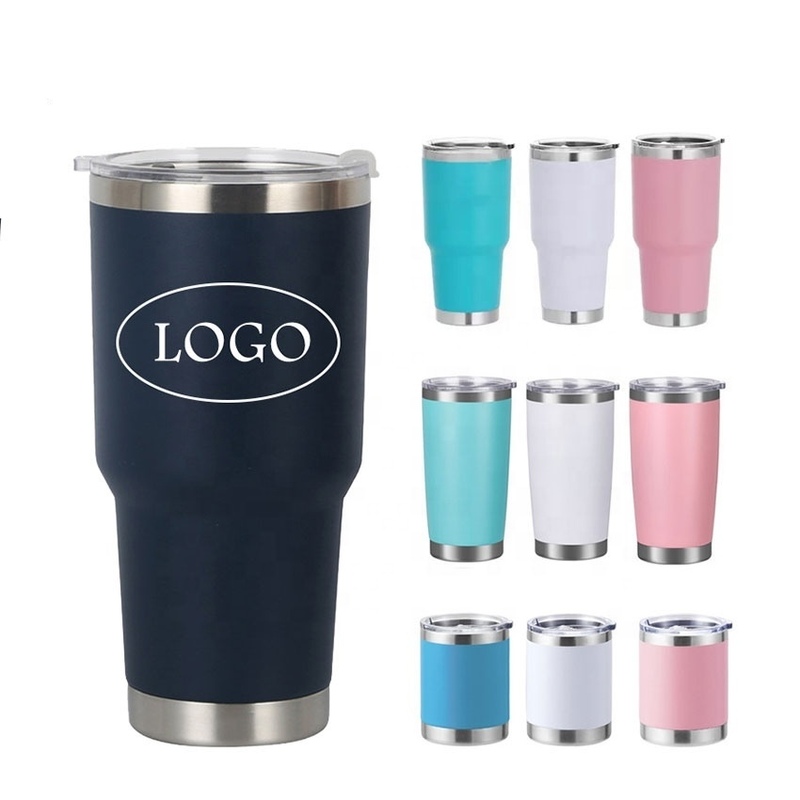
A matte powder coat wraps the rim and base evenly — the edges are where a sprayed finish fails first.
3. How to tell a real powder coat from paint before you order
You can't tell from a photo, so ask:
- "Is this powder coated or sprayed?" — a factory that runs a coating line answers in one word; a middleman hedges.
- "What temperature do you cure at?" — powder coating requires an oven. If they can't name a cure temperature, they're reselling someone else's product.
- Get a sample and press a fingernail or coin edge into the base — paint gouges; powder coat resists and at most dulls.
- Look at the rim and base — lighter, thinner color at the edges is the signature of a sprayed finish.
- If you want an engraved logo, say so up front — engraving only looks right on a coating that can take a crisp mark.
4. Powder coat plus laser engraving: the logo that can't peel
Printed logos sit on top of the finish and wear with it. Laser engraving is the opposite: the beam burns through the coating to expose the bare steel underneath, so the mark is cut into the surface rather than stuck onto it. On a matte powder coat that produces a clean, high-contrast logo that reads clearly in photos and can't peel — because there's nothing to peel.
It's the combination we steer corporate and promotional buyers toward: a matte powder coat for the color, and a laser-engraved logo for permanence. The logic matches our sublimation vs laser engraving comparison — the marking method that survives is the one that doesn't sit on the surface. A powder-coated, laser-engraved 20oz tumbler is the version of this we ship most for logo work.
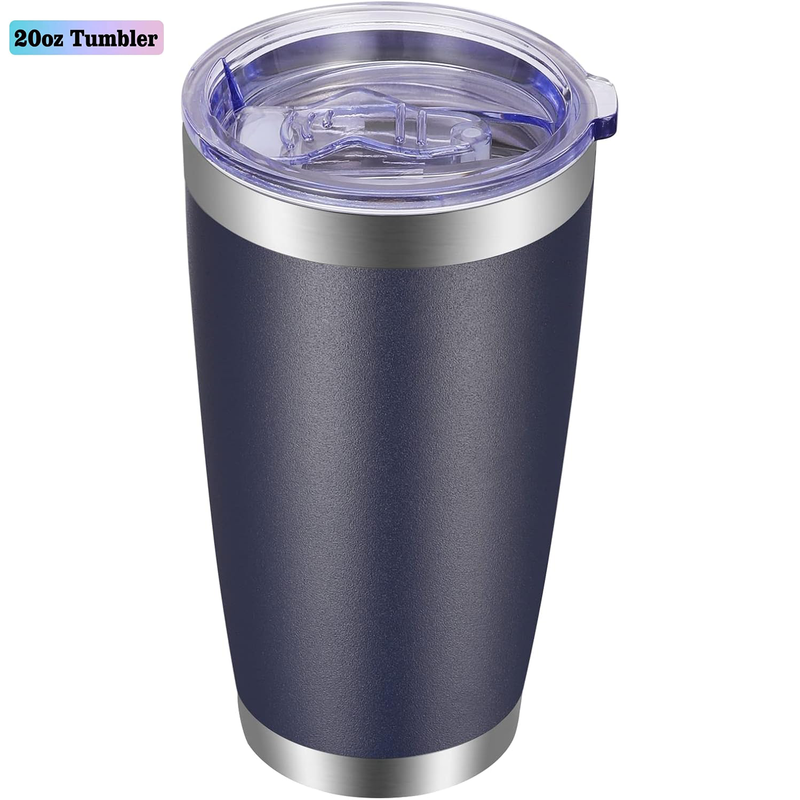
Laser engraving cuts through the powder coat to bare steel, so the logo becomes part of the surface.
5. Color, MOQ and what it actually costs
Powder coat also wins on color range: matte black, white, navy, sage, blush, sand — and we can match a Pantone for a brand run. Matte is the default because it hides minor handling marks better than gloss, but gloss powder is available where a brand wants it.
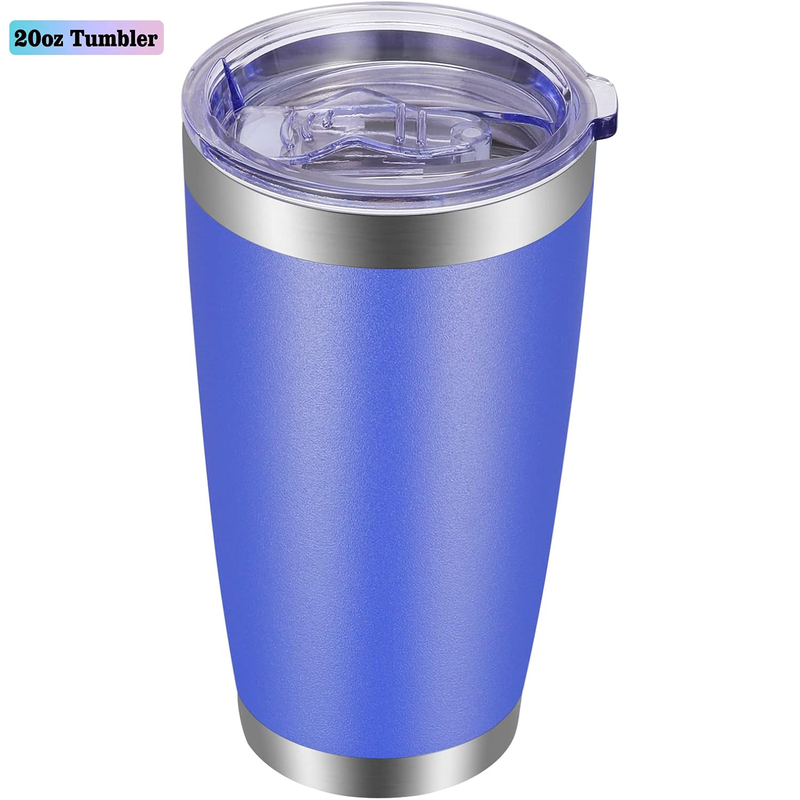
The color range is one of powder coating's quiet advantages — a full matte palette from a single coating line.
On price: powder-coated stainless tumblers in our store sit around US$1.35–1.42 per piece at listing prices, with a typical MOQ of 100 pieces for a color or logo run. The coating itself is a modest part of unit cost — the difference between a good powder coat and a cheap spray is often cents per piece, but the difference in what the customer sees a year later is the whole product.
These are listing prices from our Alibaba store, checked 2026-09-23 — an estimate, not a final quote. Your landed price depends on size, color, logo method and order quantity, and no supplier can promise a delivered price without your address and dates.
Size-wise, 20oz and 30oz cover most of the market — 20oz for desk and car cup holders, 30oz for the bigger "keeps water cold all shift" profile. For the full picture on insulation and lids, start with our custom logo tumblers buyer's guide. If the tumblers are part of a branded corporate gift program, the finish is the detail recipients notice first — it's the difference between a premium gift and a giveaway.
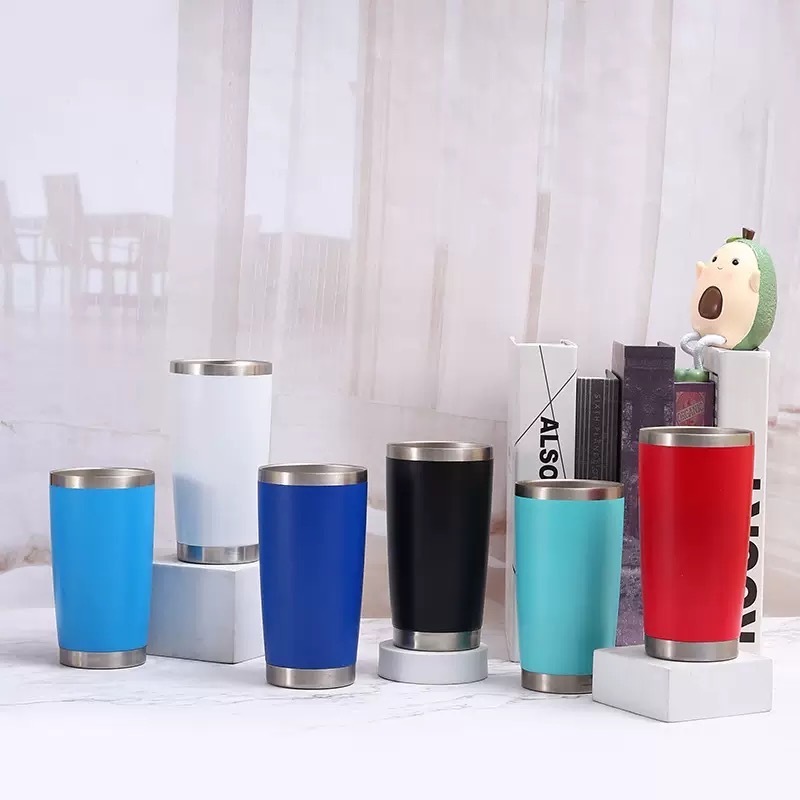
A 20oz car tumbler in powder coat — the size most corporate and retail buyers stock for everyday carry.
Shop these powder-coated tumblers on Alibaba
Four powder-coated tumblers we stock, with their current listing prices. Final price depends on size, color, logo method and quantity — request a quote with your artwork and numbers.
| Product | Style | Listing price* | MOQ |
|---|---|---|---|
| Stainless Steel 30oz Powder-Coated Travel Tumbler | 30oz, vacuum | US$1.42 | 100 pcs |
| 20oz Powder-Coated Color Tumbler with Lid | 20oz, colors | US$1.35 | 100 pcs |
| 20oz Powder-Coated Laser-Engraved Tumbler | 20oz, laser logo | US$1.35 | 100 pcs |
| 20oz Powder-Coated Car Tumbler | 20oz, car | US$1.35 | 100 pcs |
*Listing prices from our Alibaba store, checked 2026-09-23 — an estimate, not a final quote. Your landed price depends on size, color, logo method and order quantity.
See the full range of 390+ products on our Alibaba store, or request a quote with your logo and quantity. Browse our drinkware range for other insulated options, or see how we handle custom colors and logos across the catalog.