Ask ten suppliers what grade of stainless steel their bar tools are made of, and nine will answer "stainless steel" — as if that settled it. It doesn't. "Stainless" is a family of alloys, and the three grades that actually turn up in bar tools — 304, 201 and 430 — behave very differently once they meet water, citrus and a commercial dishwasher.
If you're importing bar spoons, jiggers, strainers, tongs or shakers, the grade is the biggest hidden variable in your quote. Two polished jiggers can look identical on a screen and sit ten to twenty percent apart in price, because one is 304 and the other is 201. Here's what each grade is, how to check it before you pay, and what the difference should cost.
1. The three grades, in plain English
Stainless steel resists rust because of chromium; the nickel is what separates the grades that last from the ones that don't.
- 304 (often stamped "18/8" or "18/10") — roughly 18% chromium and 8% nickel. This is the food-and-beverage standard. It shrugs off rust, stands up to acids and salt, and is safe for constant drink and ice contact. This is what a bar tool should be made of.
- 201 — 16–18% chromium but far less nickel, with manganese filling the gap. It polishes just as bright as 304 and costs less, which is exactly why it's the most common substitute. It rusts faster, especially at welds, scratches and anywhere moisture sits.
- 430 — 16–18% chromium and essentially no nickel. Magnetic, cheaper again, and the least rust-resistant of the three. Fine for things that stay dry — stands, handles, decorative legs — not for anything that sits in water.
| Grade | Nickel | Magnet sticks? | Rust risk | Typical use | Relative cost |
|---|---|---|---|---|---|
| 304 (18/8) | ~8% | Weakly, after working | Low | Food-contact tools, shakers, flasks | Base price |
| 201 | ~1% | Yes | Medium–high | Budget tools, giveaways | 10–20% less |
| 430 | ~0% | Yes | High in moisture | Dry items, handles, racks | 20–30% less |
These are general material ranges, not a lab report on any single product. The point that matters for buying: the grade, not the shine, is what sets the price and the lifespan.
2. The magnet test — useful, but not proof
Take a magnet to a bar spoon and you'll learn something in five seconds — but read the result carefully.
- 201 and 430 are strongly magnetic. A magnet that snaps on and holds firmly is a red flag.
- 304 is normally non-magnetic, but the cold-working that shapes bar tools — pressing, deep-drawing, polishing — can leave it faintly magnetic along bent edges and rims. A slight pull at the rim of a jigger doesn't mean it's 201; a firm grip across a flat face usually does.
The magnet narrows things down but never proves the grade. Use it to screen out the obvious 430 and 201, then confirm with the acid test before you commit to a container.
3. The acid test — and a slow version if you have no acid
The reliable check is a stainless testing solution: a small bottle of acid you drip onto clean, unplated metal (a few dollars from any welding or plating supplier). The result is quick and decisive.
- 304 turns blue-green.
- 201 turns reddish-brown.
No testing solution to hand? Use the slow version: wet a small sample with salt water and leave it overnight. In most climates, 201 shows rust specks by morning and 304 doesn't. It's slower and needs no chemicals — and it's a perfectly reasonable thing to ask a supplier to run on a piece pulled from production bulk rather than the hand-picked sample.
4. Where factories actually cut the corner
Nobody writes "201" on the spec sheet. The switch happens in the material line, and the lower your target price, the more likely the "stainless" part of a cheap tool is 201 or 430 somewhere in the build. From the factory side, here's how it usually plays out:
- Items under roughly US$0.30 ex-factory are almost always 201 or 430 in at least part of the build.
- Samples get made in 304; production quietly moves to 201 to hit a price. That's the classic bait-and-switch, and it's why you specify the grade in writing.
Protect yourself with three moves: write "304 stainless steel" into the purchase order, ask for a mill test certificate (MTC) for the coil the tools came from, and test one random piece pulled from the finished bulk — never the sample the supplier chose for you.
5. What each grade should cost — and how to spot a fake bargain
The price gap between grades is real but modest, and that's the trap. Nickel is the expensive part of 304, so a 201 tool is typically only 10–20% cheaper than the same item in 304. If a quote runs 40% under everyone else's, the steel is the first thing that got cut — and usually the thickness, the polish and the finish went with it.
That's why cheap bargains tend to look identical at first and disappoint later. A 201 shot jigger still measures 15/30 ml correctly on day one; the difference shows up as pitting around the rim after a few months of dishwasher runs.
6. Where the grade matters most
Grade matters wherever steel touches liquid, acid or heat — which, behind a bar, is almost everywhere.
- 304, non-negotiable: bar spoons, jiggers, strainers, tongs, ice scoops and shakers — anything that touches the drink or the ice.
- 201/430, acceptable: dry items like bottle stands, menu holders, wall racks, or one-time giveaway pieces.
A commercial dishwasher accelerates everything: heat, detergent and humidity together will make 201 show rust in weeks where 304 shrugs it off for years. If your customer is a bar or restaurant — the kind that runs the dishwasher every night — buy 304, and say so in your own marketing. It's a selling point your competitors often leave on the table.
7. Three questions to put in front of any supplier
- "What grade is it — 304 or 201? Put it on the invoice." If they won't write it, they won't stand behind it.
- "Can you send the mill test certificate?" Real 304 comes with a traceable MTC for the coil it was cut from. No certificate, no guarantee.
- "Will you test a random bulk sample for me?" A supplier who agrees is confident in the material; one who only sends the hand-picked sample isn't.
The same logic applies across the rest of your bar program — the steel in a hip flask or the gauge of a cocktail shaker matters just as much as the grade in a spoon. We've written the checkpoints for each of those separately.
Shop These Products on Alibaba
All four items below are 304 stainless steel bar tools from our catalog. Prices are the Alibaba listing prices as of September 2026 and are subject to change — a final quote depends on quantity, finish and logo work. More detail in our custom bar tools with logo guide.
| Product | Listing price | MOQ |
|---|---|---|
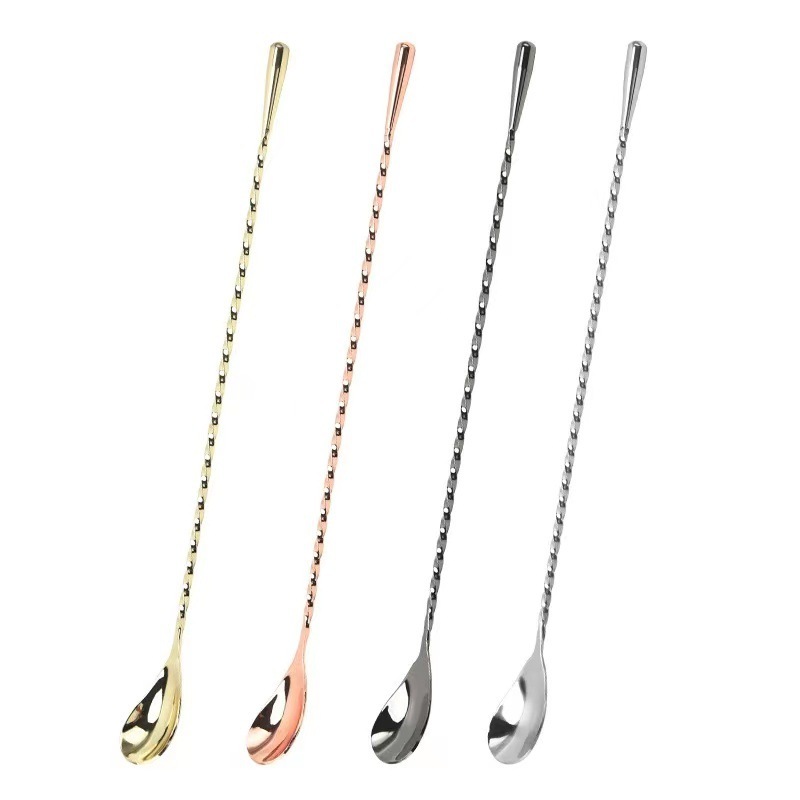
| 304 Stainless Steel Bar Spoon (30 cm, double head) | US$0.48 | 50 pcs |
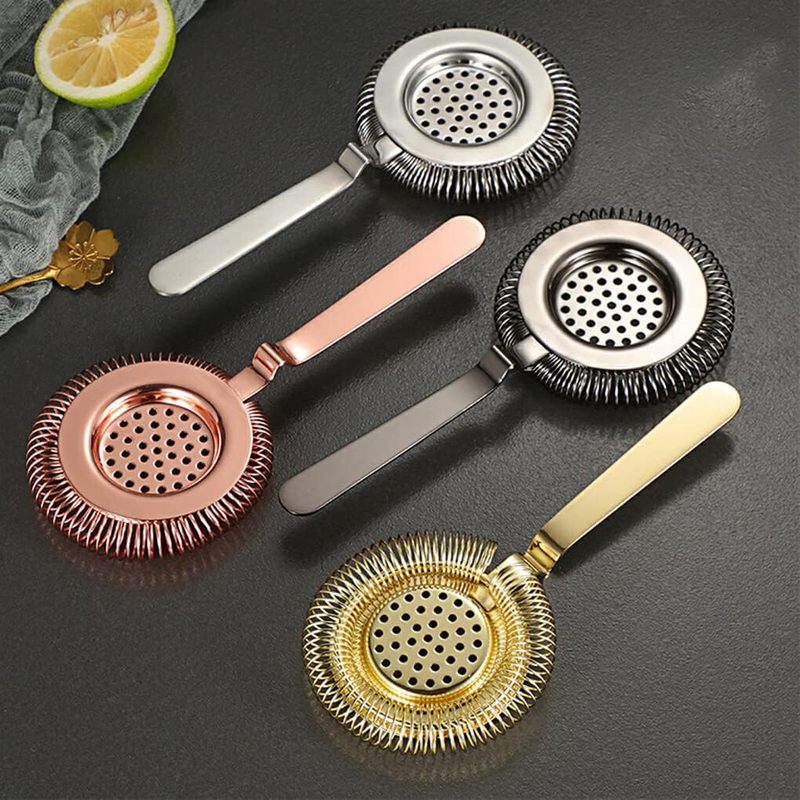
| Stainless Steel Cocktail Strainer (two-prong) | US$1.45 | 50 pcs |
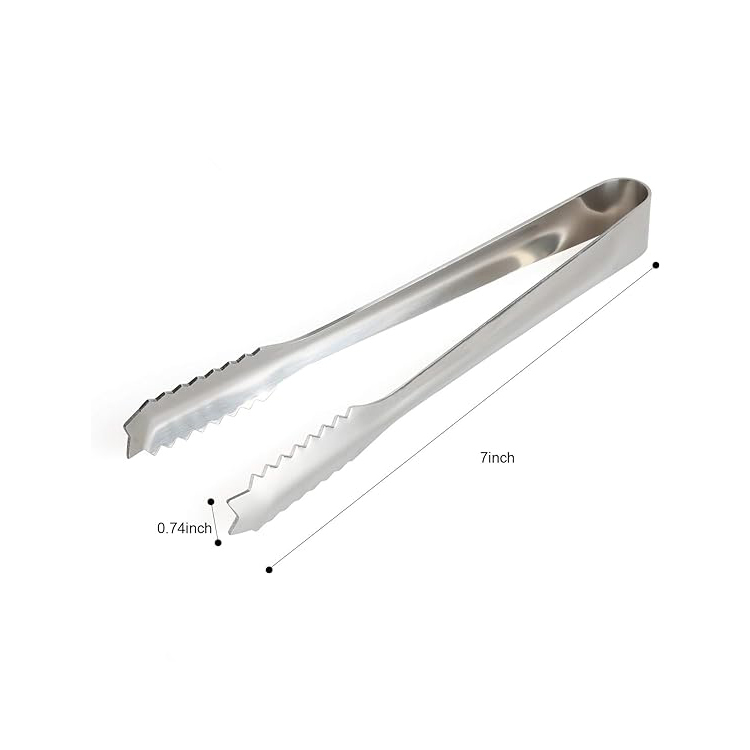
| Stainless Steel Ice Tongs / Sugar Cube Clip | US$0.80 | 50 pcs |
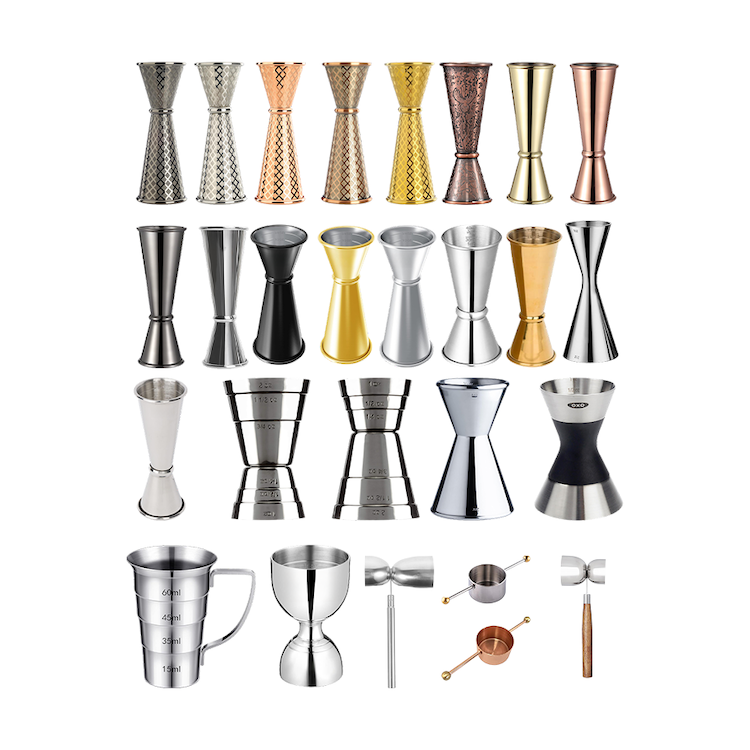
| Stainless Steel Double-Sided Shot Jigger (15/30/45/60 ml) | US$0.75 | 50 pcs |