Stainless steel ice cubes are the lowest-maintenance item we make — and also the one bars most often quietly ruin. They don't break, they don't leak, and they never water down a drink. But they do collect fingerprints, freeze together into a clump, and pick up freezer odors if you treat them like a bag of frozen peas.
A set of metal cubes should outlast the venue that buys it. We've seen sets come back for reorders years later, still mirror-bright, and we've seen sets retired inside one season because nobody thought through how they would actually be cleaned between shifts. This is the care routine we recommend to the bars, restaurants and gift buyers who order from us — the cleaning, freezing and storage habits that keep a set performing, and the signals that tell you it's time to replace rather than polish.
What you're actually caring for
Metal ice cubes are not solid blocks of steel. The standard construction is two pressed stainless-steel halves welded together around a food-grade cooling liquid — usually water mixed with a non-toxic gelling agent that lowers the freezing point, so the cube freezes solid without swelling and splitting the seam. A 27mm cube in mirror or brushed 304 finish is the workhorse of the category, like this square stainless steel ice cube set we run for bars and gift programs.
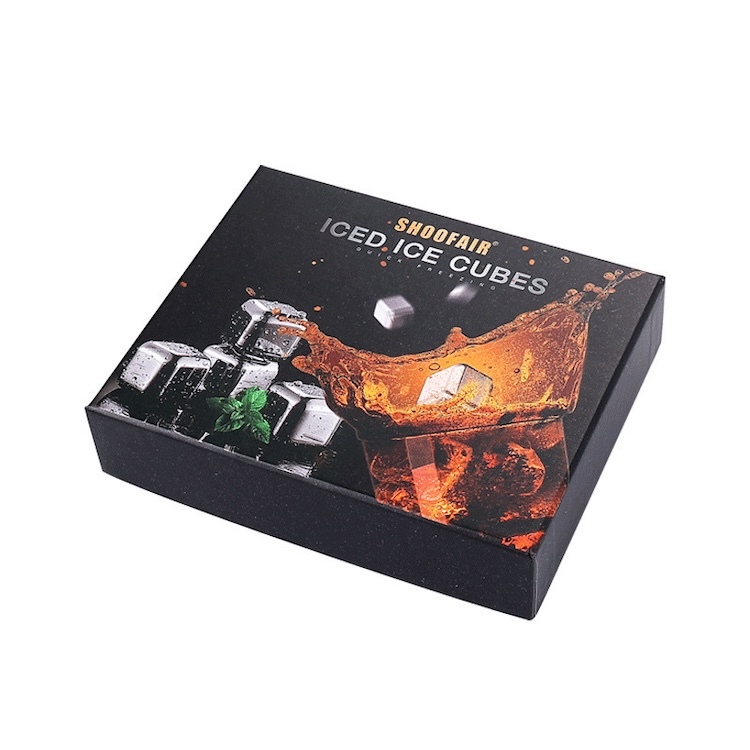
27mm square stainless steel ice cubes — the seam between the two halves is the only part you need to protect.
The care routine below matters because of that seam. It is the only weak point on the whole product. Treat the seam gently — don't drop cubes onto hard floors, don't pry apart frozen clumps with a knife — and a set lasts for years. See our product brief for this exact set for the full spec, and our 304 vs 201 vs 430 stainless steel guide if you want to confirm the grade before you buy.
Cleaning metal ice cubes for commercial use
The hygiene bar is different behind a bar than it is in a home cabinet. At home a set might touch one drink a week; in service it can touch dozens in a night, handled by different people. Two rules cover most of it:
- Wash after service, not before the next one. Cubes rinsed the next morning come out with residual oils and lime from the night before. Get them through a wash and fully dry before they go back in the freezer.
- Dry them before they go back. Water spots are cosmetic, but trapped moisture between frozen cubes is exactly what makes them stick together overnight.
Cleaning method, in order of preference:
- Warm water and mild dish soap — enough for daily use. Scrub with a soft sponge; steel wool leaves scratches where residue hides.
- Dishwasher — safe for plain 304 cubes, but skip the heated-dry cycle on brushed-finish sets, and don't leave them in contact with aggressive detergents long-term.
- Sanitizing — for commercial service, a quick rinse in a food-safe sanitizer after washing, then a clean-water rinse and a full air dry.
Avoid bleach and harsh chlorinated cleaners. They won't rust 304 steel, but they can dull a mirror finish over time, and in a busy bar the risk of residue transferring into a drink isn't worth it.
Freezing without the clump
The most common complaint we hear isn't about cooling — it's about a set freezing into one solid brick. It happens when cubes go into the freezer wet, or touching, or stacked. The fix is boring but effective:
- Freeze dry, separated cubes in a single layer, on a tray or in the tray the set ships with. A layer, not a pile.
- Once frozen — about 2–4 hours in a standard freezer — tip them into a bin together and they'll stay separate.
- Keep a dedicated bin or tray for the cubes so they don't absorb odors from raw food, onions or open containers in the freezer.
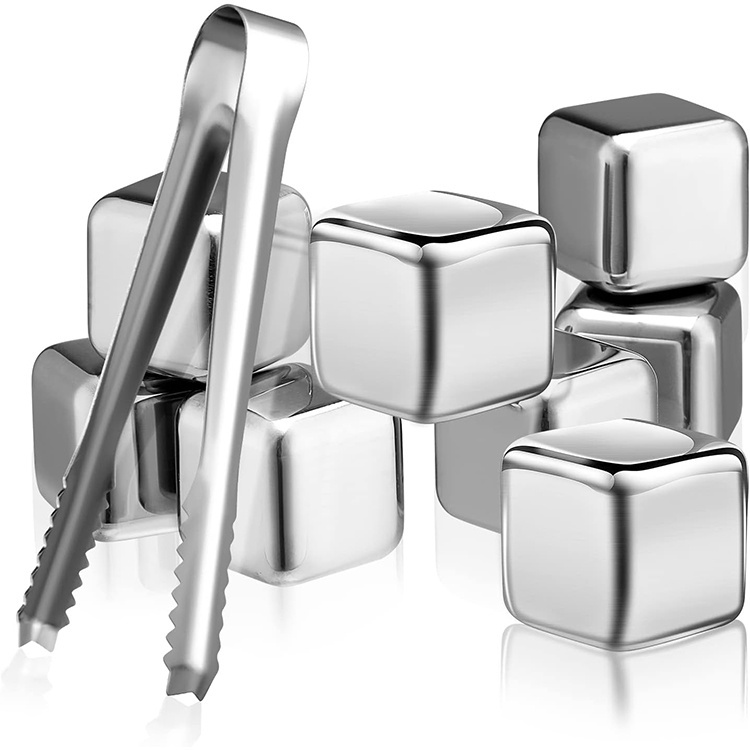
A set that ships with its own tray survives a freezer far better than one that ships loose.
For a bar, run two sets on rotation: one in service, one in the freezer. A 12-piece freezer-proof set chills several whiskeys before it needs re-freezing, but only if the frozen set is actually ready — rotation beats a single overworked set every time.
Many listings carry a "freezer proof to -80°C" rating, which means the internal liquid won't split the cube in extreme cold. A normal -18°C bar freezer is nowhere near that limit; the rating matters more for cold-chain storage and shipping than for your service freezer.
Storage that keeps sets complete
Cubes go missing the same way socks do. Two habits keep a set whole:
- Store in the tray or a dedicated bin, not loose in a freezer drawer.
- Use tongs, not fingers, for service. Fingers transfer oils that dull the finish — and in a service setting, tongs are cleaner.
If the set is part of a gift box — cubes, whiskey glass, tongs — the tray doubles as the storage piece and as part of the presentation. This is also why the tray is the first thing to confirm on a bulk order: a set that ships with a tray has a much better survival rate than one that ships loose.
How long do metal ice cubes last, and when do you replace them?
304 stainless steel doesn't rust and doesn't wear out in normal use. What ends a set's life is the seam or the finish:
- A dent near the weld. The seam is the weak point; a dent there can eventually crack and leak the internal liquid.
- Deep scratches from steel wool or from being knocked around a metal sink — scratches trap residue and become a hygiene question in commercial service.
- A permanently short set. At some point you're re-freezing too often, and it's cheaper to reorder a full set at the MOQ than to nurse a half-set.
For a busy bar, plan on replacing sets every 2–3 years — not because the steel fails, but because the set has walked away or collected cosmetic damage. For gifting and home use, a set should last far longer.
Care at a glance: steel vs granite vs plastic
| Stainless steel | Granite / soapstone | Plastic / gel cubes | |
|---|---|---|---|
| Cleaning | Soap + water, dishwasher-safe | Soap + water; porous, needs a thorough dry | Soap + water; scratches and stains easily |
| Freezing | 2–4 h; freeze separated | 2–4 h | 1–2 h; can split or cloud over time |
| Odor pickup | Low | Medium — porous stone | Medium–high |
| Lifespan | Years — the seam is the limit | Years; can chip | Months to a couple of years |
If you're still deciding which chiller belongs in the box, our stainless vs granite vs plastic comparison covers cooling speed and margin, and whiskey stones vs stainless cubes settles the gift-set question.
What to specify when you order for a bar
If you're ordering metal ice cubes for a venue or a gift program, three spec points matter more than the price per cube:
- 304 grade in writing. The grade on the spec is what you hold a supplier to. Confirm it on the order, not just the listing.
- Tray and tongs included. The tray is what makes the set survive in a freezer; ordering cubes loose is where sets go to die.
- Custom laser logo. A logo etched on one face adds brand presence and costs a fraction of the per-unit price — the standard upgrade for corporate gifting and hotel minibars, like this custom laser logo stainless steel ice cube option.
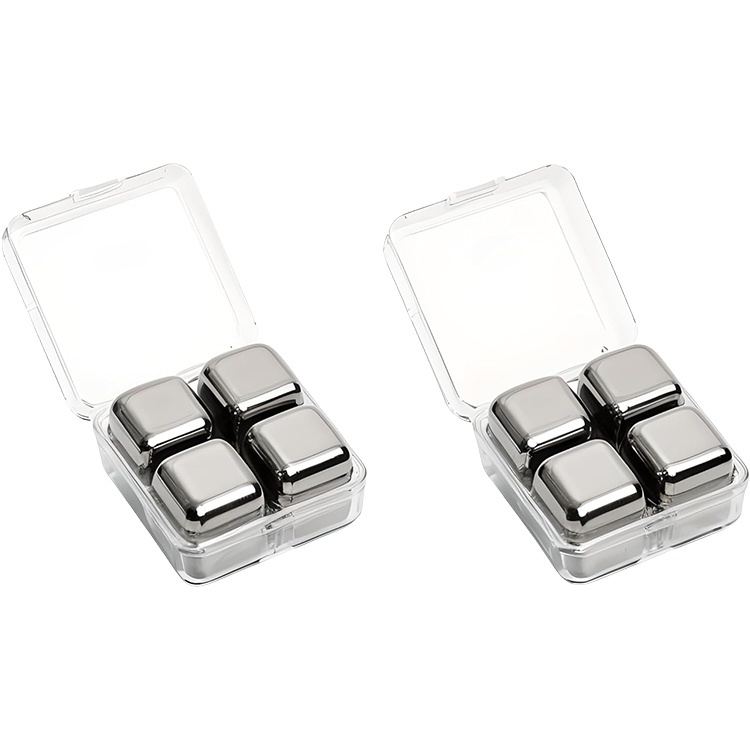
Shop These Products on Alibaba
| Product (Alibaba listing) | Listing price (Oct 2026) | MOQ |
|---|---|---|
| OEM Factory Square Stainless Steel Ice Cube Set with Logo | US$0.23 | 100 pcs |
| 304 Stainless Steel Whiskey Ice Cubes, 27mm, 12-Piece, Freezer Proof -80°C | US$0.25 | 100 pcs |
| Custom Laser Logo Reusable Stainless Steel Whiskey Chilling Cubes, 27mm | US$0.23 | 100 pcs |
| Stainless Steel Ice Cube Tray Set, 27mm Reusable Ice Cubes | US$0.23 | 100 pcs |
Listing prices shown as of 17 October 2026 and can change; MOQs are per listing. Final pricing depends on quantity, finish and logo — request a quote for exact numbers.
Tell us the venue or use case — bar service, hotel minibar, corporate gift box or resale line — and we'll quote the cubes, the tray, the tongs and the logo together. For the full range see our ice buckets & cubes category, the bar & restaurant supplies page for venue buyers, or the whole barware catalog.
See the Full Range of 390+ Products on Alibaba Ask for an Ice Cube Quote on WhatsApp Inquiry Form