Cocktail shakers get asked to do two very different jobs. In a bar, one shaker gets filled, shaken, knocked against the rail and dropped into a hot dishwasher a dozen times a night, every night. In a gift box, the same shaker might be picked up, admired, used once and left on a shelf. The decoration you put on it has to survive whichever job you're buying it for — and that single question is what "engraved vs printed" is really about.
The physical difference is simple. Laser engraving removes a microscopic layer of the steel, so the mark sits in the metal. Printing — screen, pad or UV — lays ink or coating on top of the surface. Every durability, color and cost difference below flows from that one fact.
Laser engraving: the mark is in the metal
On our floor, engraving is done with a fiber laser that traces the artwork onto the shaker body. The beam vaporizes a thin layer of stainless, leaving a light-grey mark that is the exposed steel itself. Because nothing is added, there is nothing to peel, fade or scrub away — the logo survives commercial dishwashers, sanitizer, ice and years of handling. It is the only decoration I'd put on a shaker that has to work behind a real bar.
Two trade-offs. First, engraving is single-tone — you get the natural steel tone, not your brand's Pantone red. Second, contrast depends on the finish: a mirror body reads the mark dark against bright, while a brushed body reads it as a subtle tone-on-tone. Fine lines and small text stay crisp because the laser can't smear or bleed, which is why monograms, dates and small logos come out better engraved than printed.
Printing: color that sits on top
Printing is how you get color onto a curved steel surface. Screen printing pushes ink through a mesh one color at a time; pad printing uses a silicone pad to transfer ink around curves; UV printing cures ink under ultraviolet light. All three can match your brand colors, and full-color or gradient artwork is possible — which engraving simply can't do. Our printing methods guide breaks down which one suits which job.
The catch is that the ink is a surface layer. Hot water and aggressive dishwasher detergent are exactly what break down screen and pad inks over time, starting at the edges of the design. A printed shaker will still look great in a gift box a year later; behind a busy bar it will show its age in months, not years.
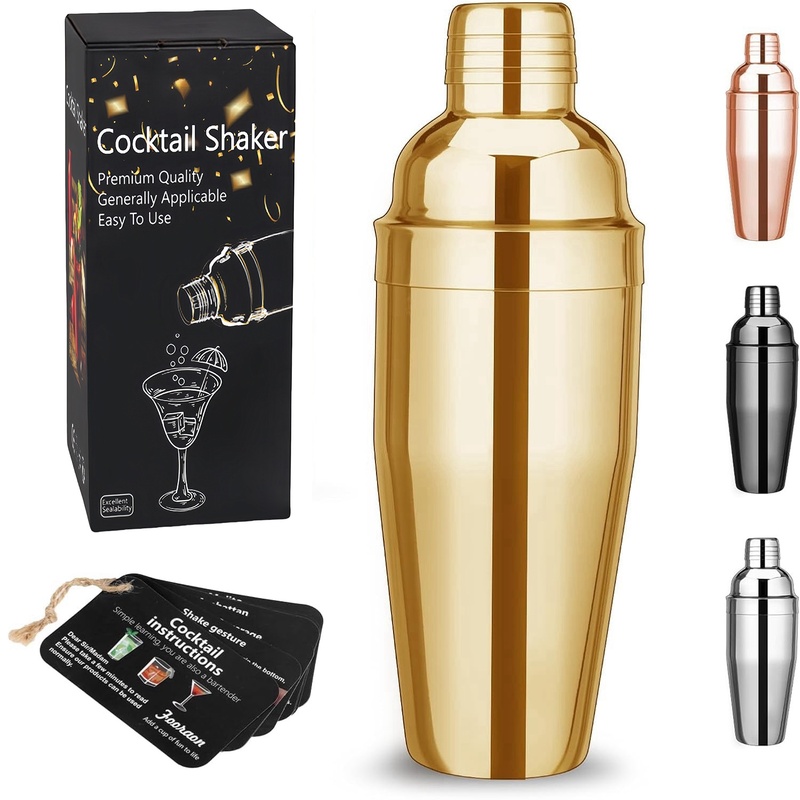
This is also how colored and glitter shaker bodies are made — they're a coating applied over the steel, not the steel itself. If you want a colored body and a logo, the logo is printed onto the coating, because engraving would burn straight through it.
The dishwasher question, side by side
| Factor | Laser engraving | Screen / pad / UV printing |
|---|---|---|
| Where the mark sits | In the steel — nothing to peel | On the surface — an ink layer |
| Dishwasher & sanitizer | Survives — the mark is the metal | Degrades over time from heat and detergent |
| Color | Single steel tone only | Full color, gradients, Pantone match |
| Fine detail | Crisp lines and small text | Good, but edges can blur as it wears |
| Per-unit cost at volume | Low and flat, no per-color charge | Rises with the number of colors |
| Best fit | Bars, restaurants, hotels, reorders | Retail, promo, seasonal designs, gifts |
Where the money actually goes
Engraving cost is mostly front-loaded: a one-time artwork or setup charge, then a low, flat per-unit fee that doesn't change with colors — there aren't any. The setup-fee math at 500 vs 5,000 units is exactly what I walked through in our engraving cost guide, and it's why engraving becomes the cheap option the moment you reorder the same logo.
Printing works the other way. There's a screen charge per color (or a setup for pad/UV), and per-unit cost climbs as you add colors. It's usually the cheaper route for a single colorful order you don't plan to repeat — and the more flexible one when the design changes every season.
Finish decides whether the engraving shows
Not every shaker is a good engraving candidate. Mirror and brushed stainless engrave beautifully, each with its own contrast. Colored, painted or plated bodies are a different story: engraving removes the coating, so the mark shows the raw steel underneath — usually not what you want. If the body is colored, print the logo; if the body is bare steel, engrave it. The full finish comparison is in our shaker finish guide.
What I'd order, buyer by buyer
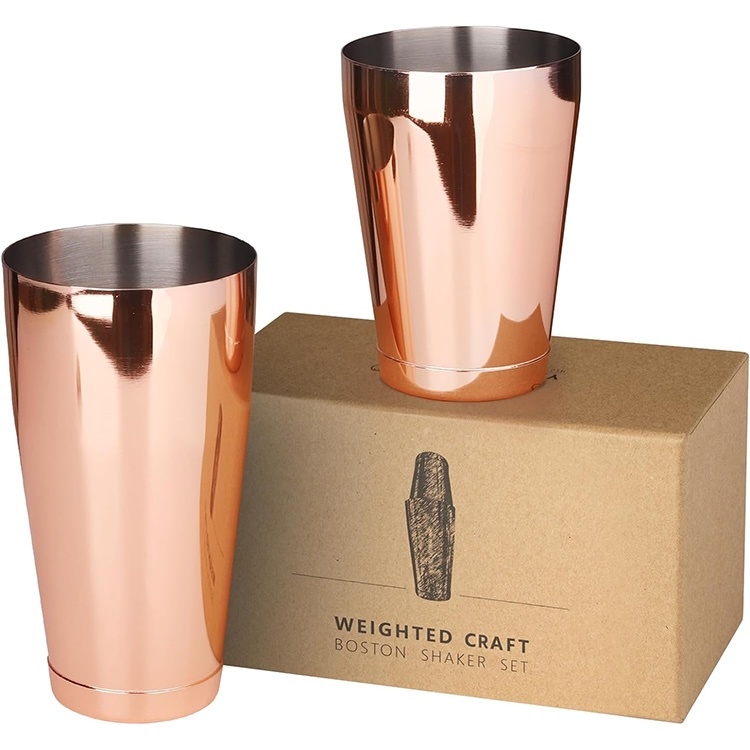
Bars, restaurants and hotels: engrave, on mirror or brushed 304. The logo survives the dish machine and sanitizer, and every reorder comes out identical — the two things commercial operators actually care about. A mirror Boston shaker with an engraved mark on the tin is our standard for this.
Corporate and client gifts: engrave a monogram or a short logo. It reads premium in a way print doesn't, and a gift is exactly the use case where single-tone is no disadvantage.
Promo companies and seasonal retail: print. You get full color, you can change the design every campaign, and you're not paying for durability the end customer won't need. A colorful shaker at a lower per-unit cost is the right trade here.
If you're still deciding between a mirror, brushed or colored body before you even get to the logo, start with our cocktail shaker range or the customization page — the finish and the decoration method are one decision, not two.
How to read the prices here
The prices below are Alibaba listing prices as of October 2026, FOB China, before freight and any logo setup fees. They're reference points for budgeting, not a final quote — your landed cost depends on quantity, decoration method and destination. No supplier can honestly promise a final price or a delivery date without seeing your artwork and address first.
Shop These Products on Alibaba
| Product | Price (listing, Oct 2026) | MOQ |
|---|---|---|
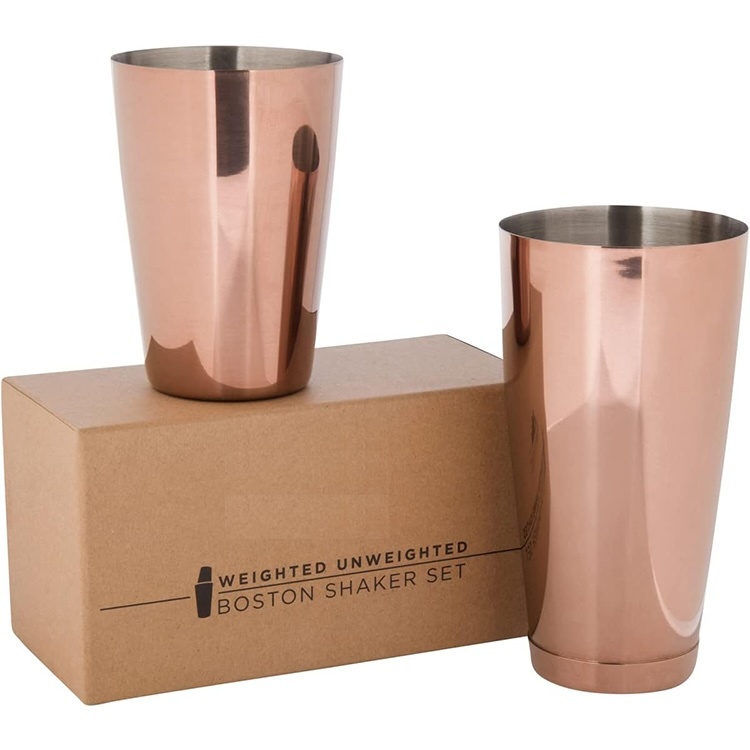
| Copper Plated Boston Shaker (Engrave Logo Option) | US$1.95 | 50 pcs |
| 304 Mirror Boston Shaker with Weighted Tin | US$1.95 | 50 pcs |
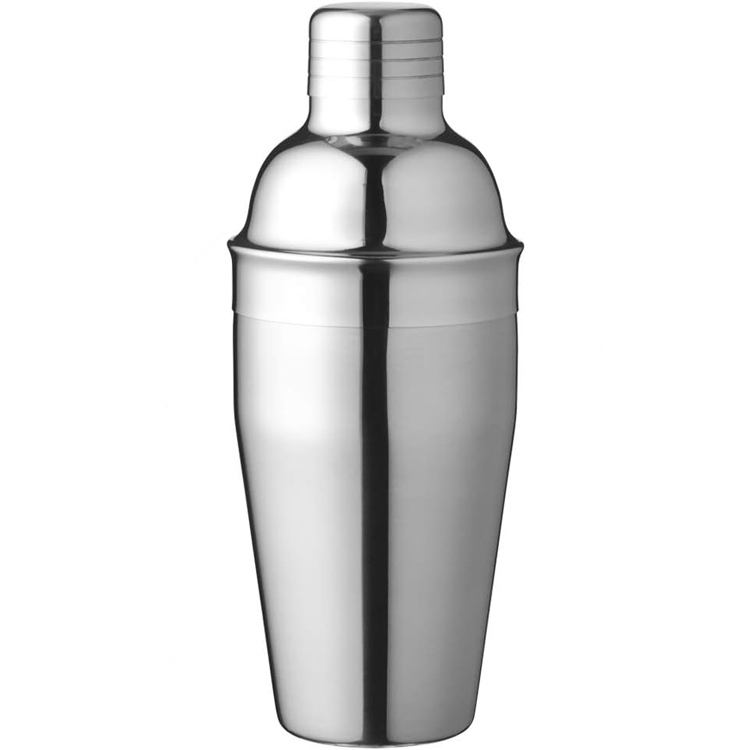
| Brushed Finish Stainless Conical Shaker, 550ml | US$1.90 | 50 pcs |
| Colorful Glitter Martini Shaker | US$1.58 | 50 pcs |
Tell us where the shakers will work — a service bar, a hotel minibar or a gift box — and we'll recommend the finish and decoration to match. One production run, one QC inspection, one shipment.