Engraving is the one decoration that doesn't sit on a wine glass — it becomes the glass. A logo etched into the surface can't peel, can't rub off in a commercial dishwasher, and can't be smudged by a bartender's thumb. That permanence is exactly why bars, restaurants, hotels and corporate gift buyers pay for it. It's also why a bad engraving job is so expensive to undo: the pieces are already made, and glass can't be reprinted.
We engrave tens of thousands of pieces a year on our drinkware lines in Hangzhou for brand owners, hotels and wedding suppliers. This is what we tell every buyer before they commit artwork — because most engraving complaints are decided before the laser ever fires.
Frost vs. deep engraving: the two looks
On clear glass, a laser can do two different things, and buyers confuse them constantly. They look different, cost different amounts per piece, and carry different breakage risk:
| Frost engraving (surface) | Deep engraving (relief) | |
|---|---|---|
| Depth | ~0.01–0.05 mm, a frosted skin | ~0.1–0.3 mm, a visible groove |
| Look | Soft white matte, reads at arm's length | Catches light, premium, tactile |
| Best for | Fine text, logos, large artwork | Monograms, heavy bases, trophy pieces |
| Speed & cost | Faster, lower cost per piece | Slower, more heat, higher per-piece cost |
| Breakage risk | Low on healthy glass | Higher on thin walls |
Frost is the workhorse for hospitality and promotional glassware: it reads clearly without weakening the piece. Deep engraving belongs on a heavy-base tumbler or a trophy goblet, where the wall is thick enough to take the groove. A buyer who specs deep engraving on a 1 mm rim-thinned bowl has bought themselves returns.
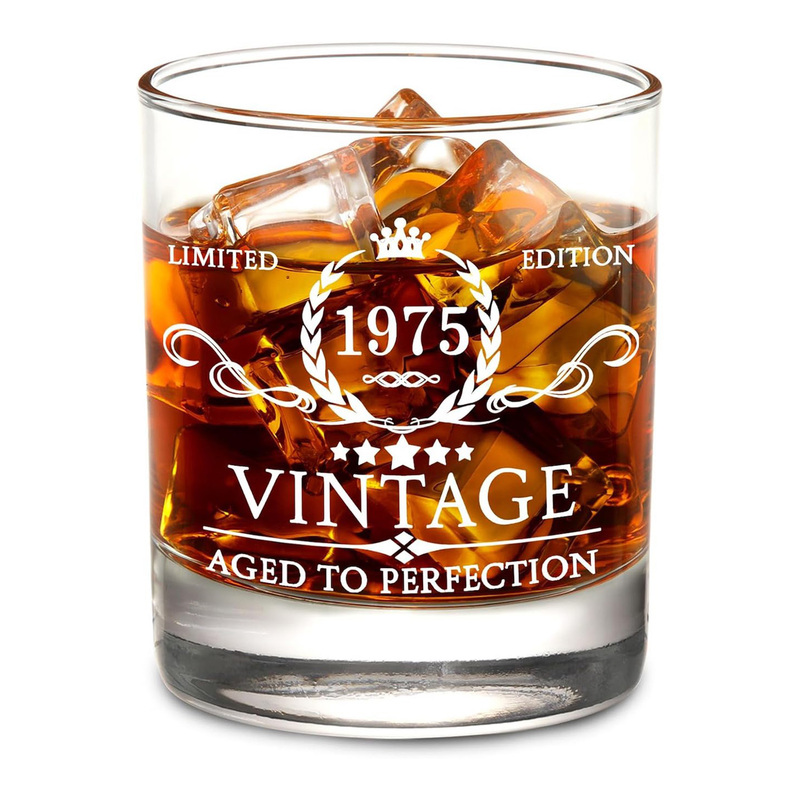
This is the shape where deep engraving earns its keep: a heavy-base lead-free crystal tumbler (listing price US$0.65, MOQ 50) with enough glass in the base to hold a crisp groove. Put the same depth on a thin-stemmed coupe and the laser becomes the problem, not the logo.
Why thin glass breaks under the laser
The single biggest complaint we hear is breakage — and it's almost never random. A CO2 laser engraves glass by heating it at the point of focus, and that thermal stress concentrates exactly where the beam lands. On a rim-thinned wine glass wall, that stress can crack the piece at the mark, sometimes hours later when the glass goes through its first hot dishwasher cycle.
- The bowl wall and rim are the danger zones. That's where the glass is thinnest. Keep the mark on the bowl's lower third or the base, where the glass is thicker.
- The base and lower stem are the safe zones. They carry more material and sit under compression, so they absorb the heat without cracking.
- Tempered glass should not be laser engraved. The heat releases the temper's internal stress, and the piece can shatter on the table, not just in the machine.
Our standing rule for buyers: on a stemmed wine glass, spec frost on the lower bowl or base. If you want a deep mark, choose a piece built for it.
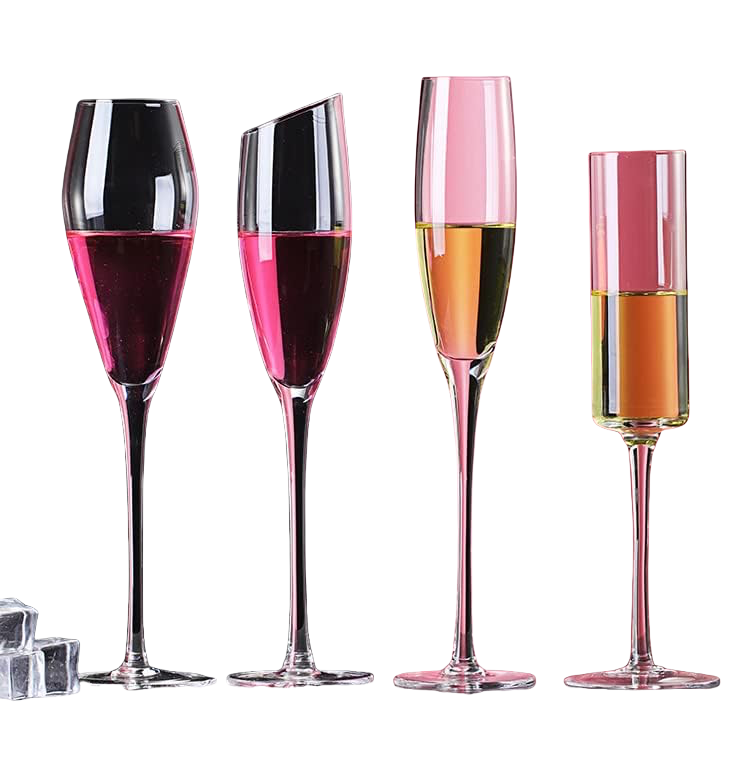
A hand-blown crystal wine glass (listing price US$0.99, MOQ 50) like this one has a thicker base and a sturdier stem than mass machine-blown glass — which is precisely what makes it a safer engraving canvas. If your brand is going on the base or lower bowl, this is the kind of construction to look for. For a deeper read on what separates a good wine glass from a cheap one before you order a thousand, our wine glass quality checklist walks the whole inspection.
Artwork specs that save a round of samples
Half the complaints about "bad engraving" are actually bad artwork. The laser is unforgiving with detail that a printer would shrug off. Get the file right and you skip an entire proofing round — which, in a lead-time-sensitive order, is the difference between on-time and late:
- Send vector, not a JPEG. AI, PDF or SVG. Raster logos need 300 dpi minimum at final size.
- Convert text to outlines. If the factory doesn't have your font, the engraver substitutes one — and it will be wrong.
- Keep line weight at 0.3 mm minimum for frost, 0.5 mm for deep. Hairlines below 0.2 mm vanish or melt together.
- No gradients, no grays. Engraving is binary — marked or not marked. Grayscales turn into noisy dithering.
- Avoid fine serifs and small reversed text on a curved bowl; the curve distorts both.
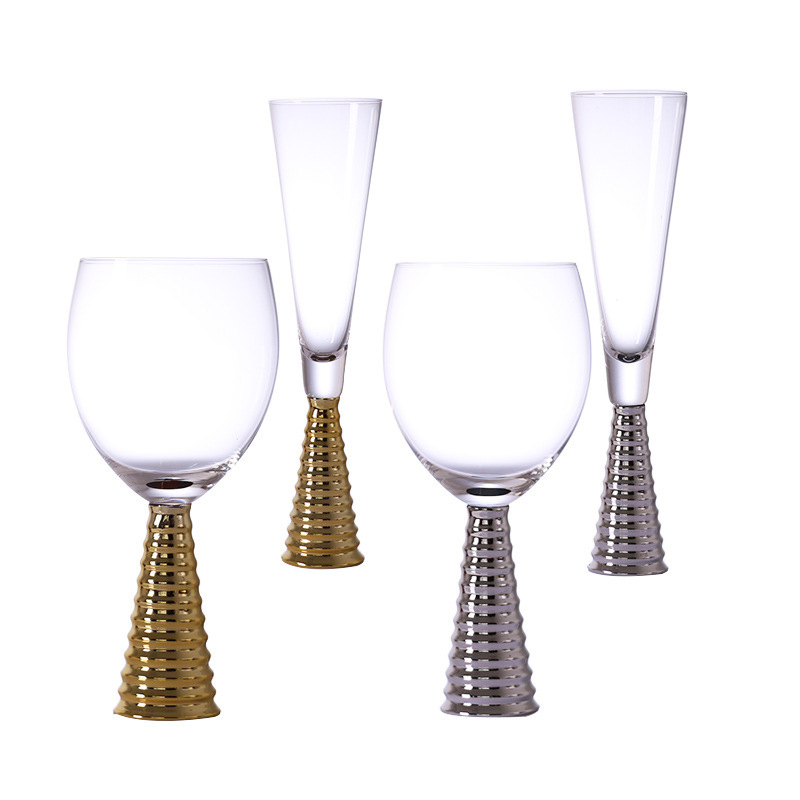
For premium programs — hotel bars, private-label spirits, fine dining — the piece itself does half the work. A handcrafted artisanal goblet (listing price US$3.27, MOQ 100) gives the laser a stable, substantial surface, which means the engraving can be finer and the result more consistent. See our stemmed vs. stemless guide before you decide where the mark sits.
The five complaints buyers hear most
When a client pushes back on an engraved order, it's almost always one of these five — and all five are preventable at the spec stage:
- "The logo looks fuzzy." Wrong file format or detail too fine for the process. Fix: vector file, minimum line weights.
- "It cracked in the dishwasher." Deep engraving on a thin wall, or a mark too close to the rim. Fix: frost on the lower bowl or base.
- "It's off-center or tilted." The glass wasn't held in a proper fixture, or the bowl's curve wasn't accounted for. Fix: ask how the piece is jigged during engraving.
- "You can barely see it on the shelf." Frost on ultra-thin, highly polished glass can read weak. Fix: bump contrast by engraving a slightly larger mark or choosing a heavier base.
- "Every piece looks different." Machine settings not locked, or wall thickness varying across the batch. Fix: confirm settings are fixed and glass comes from one mold line.
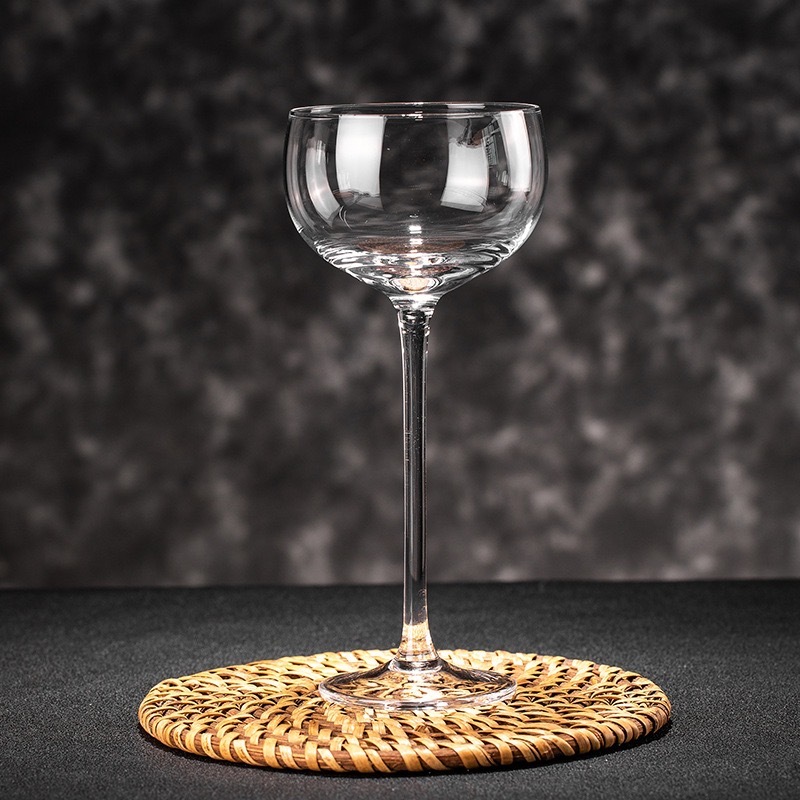
A lead-free burgundy long-stem goblet (listing price US$0.95, MOQ 48) is the kind of piece where a frosted monogram on the base reads elegantly instead of getting lost — provided the artwork is clean and the fixture holds the stem straight.
When engraving beats screen printing — and when it doesn't
For glass, the real decision is usually engraving versus screen or pad printing. Here's the honest split:
- Engraving wins on permanence — it survives dishwashers and years of handling, needs no color screens, and carries higher perceived value for gifting and premium venues. Cost is laser time per piece, so small runs are affordable.
- Printing wins on full color and high-volume straight-sided glassware, where per-color screens amortize across thousands of pieces — but the print wears, and the color is on the surface, not in the glass.
Rule of thumb: on thin stemware, print. On heavy bases, premium goblets and anything meant to last a decade in a bar, engrave. If you're unsure which your program needs, our customization page shows what each process can and can't do, and our factory page shows the equipment it runs on.
Shop These Products on Alibaba
Every item below is a real listing from our Alibaba store — click through for current pricing, photos and full specs. For a custom engraved logo, see our customization page or send an inquiry with your artwork and quantity.
Prices are the listing prices on our Alibaba store as of October 2026, FOB before customization and freight. They are reference points, not quotes — final price depends on quantity, engraving depth and your artwork. Delivery is confirmed at order time, not promised here.
See the full range of 390+ products on our Alibaba storefront, check our buying checklist before you commit, or send an inquiry and we'll match the right glass, mark depth and placement to your brand.