When you order a few hundred wine glasses, you can hide the bad one at the back of the cupboard. When you order 1,000 for a restaurant, a hotel or a wedding season, you can't — one bad case is thirty broken glasses and a customer call you don't want to make.
The good news is that wine glass quality is decided by four things you can actually check, and most of them show up before you pour a single drop. We press, blow and finish glass drinkware on the factory floor in Hangzhou, and every week we watch buyers judge a glass by its photo instead of its rim. This is the checklist we hand them — the same points our own QC team runs down the line before a carton is sealed.
1. The rim is where quality shows first
Run a finger around the rim of a wine glass. A good one is thin, even and perfectly round — one continuous edge, with no bump, no seam and no rough patch. Cheap machine-pressed glass often has a rolled rim: thicker, slightly uneven, and the first place a glass chips when it hits a dishwasher rack or another glass in the sink.
There are two main rim finishes you'll see on wholesale wine glasses:
- Fire-polished rim — the cut edge is reheated until it rounds and seals itself. Thin, smooth and chip-resistant. This is what you want on stemware and coupes.
- Rolled or ground rim — faster and cheaper to make. You can feel the extra thickness, and often a faint seam where the glass was folded.
When a sample arrives, close your eyes and run your finger around the rim. If it catches anywhere, that's the first QC flag — and the flag that predicts most of the later breakage.
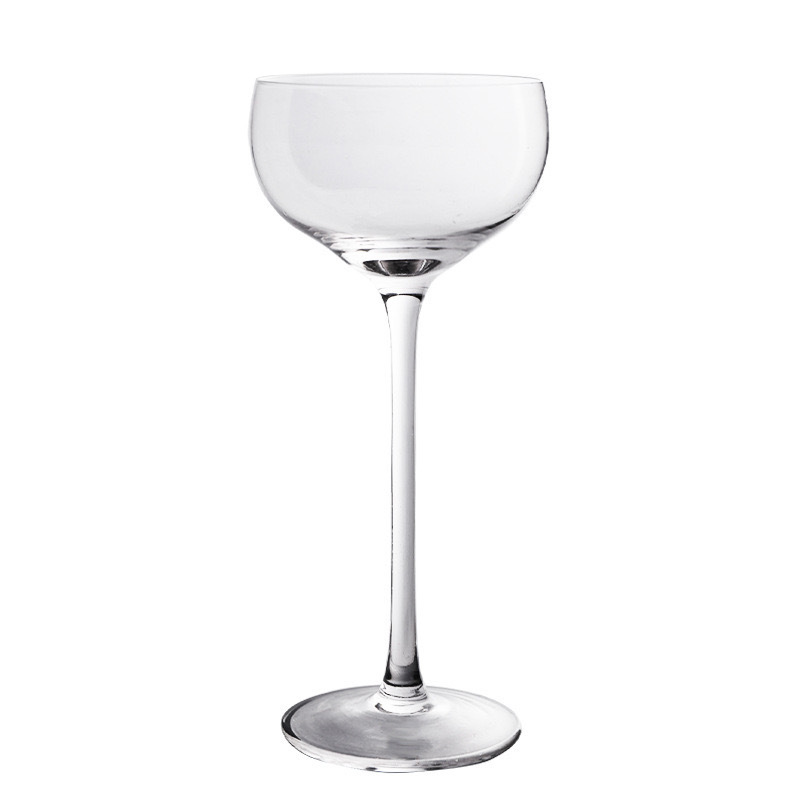
2. Clarity: hold it up to the light
Glass tells you its grade if you hold it against a window or a white page. Lead-free crystal should be bright and colorless, with a little sparkle where the light hits it. Soda-lime glass — the everyday stuff — usually carries a faint green or grey tint, and the cheaper the batch, the stronger the tint.
Three things to look for in the light:
- Bubbles — small air pockets trapped in the wall. A few tiny ones in hand-blown glass are normal; a swarm of them in pressed glass means a rushed melt.
- Seeds and stones — solid specks of unmelted material. They're stress points, and they're where a glass cracks weeks later.
- Cords — faint wavy lines from uneven mixing. They look like smears in the glass and weaken the wall.
The practical line: for a restaurant or a branded gift, you want lead-free crystal — not for the name, but because it's clearer, brighter and more consistent batch to batch. Most listings say "lead-free crystal" or "crystal"; if the price looks suspiciously low, ask whether the item is actually soda-lime. A lead-free crystal coupe and a plain glass both hold 150ml — the difference is what the customer sees and how the batch ages.
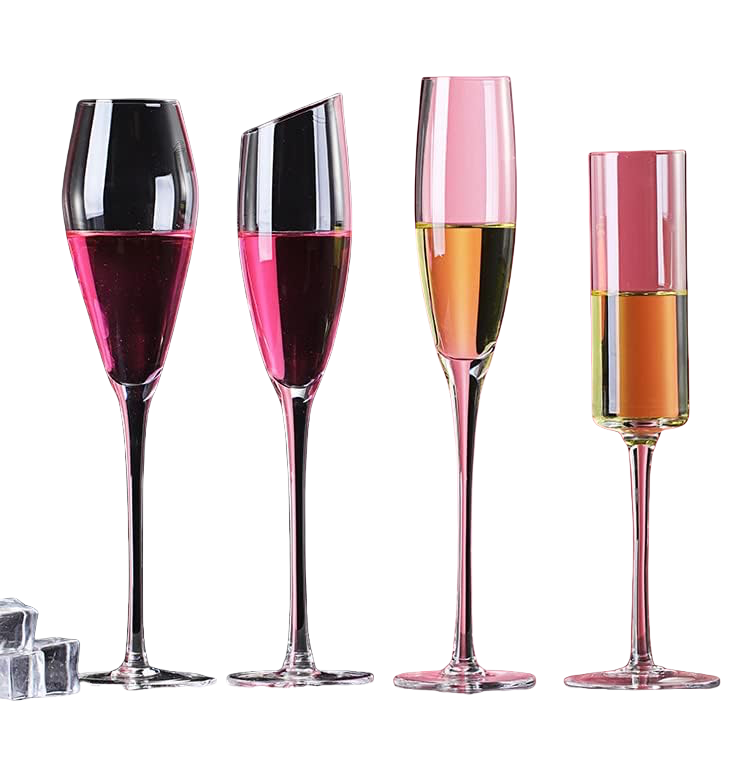
3. Weight, balance and the stem joint
A good wine glass balances. Pick it up by the stem: it should feel stable rather than top-heavy, and the bowl shouldn't wobble. Weight is the part buyers over-index on — heavier is not better. A thick, heavy glass is often a cheap pressed glass dressed up as premium; a thin, well-made glass feels lighter and still survives the shift.
Check three points on the sample:
- Bowl-to-stem joint — look for a clean join with no blob of glass where the stem meets the bowl. On cheap stemware this is where cracks start.
- Stem straightness — roll the glass across a table. A bent stem makes it wobble, and it's a sign the annealing or the handling was sloppy.
- Weight consistency — weigh five glasses from the sample. They should sit within a gram or two of each other. If one is noticeably lighter, its wall is thinner and it will break first.
Hand-blown glass will always show small differences between pieces — that's the process, and it's fine. What isn't fine is a 10% weight spread in machine-pressed glass, which should be near-identical piece to piece. For how the choice affects your brand print area, see our guide to stemmed vs stemless wine glasses.
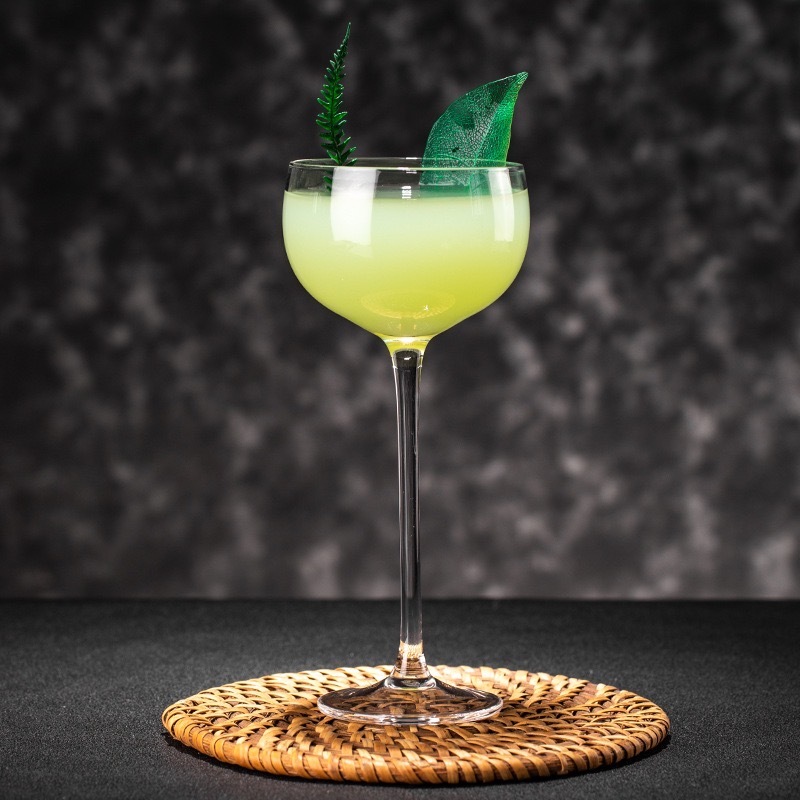
4. Annealing is invisible — and it decides your breakage rate
After a glass is formed, it's still full of internal stress. Cool it too fast and that stress stays locked in the walls; the glass can crack days or weeks later — in the box, on the shelf, or in a guest's hand. Annealing is the controlled slow cool that lets the stress out, and it's the one step you can't see in a listing photo.
You can't check annealing by eye, but you can ask the right questions:
- Ask whether the glasses pass through a lehr — the annealing oven — and roughly what the cooling cycle is. A supplier that doesn't understand the question is a warning sign.
- Ask for the breakage allowance in transit. A well-annealed, well-packed line ships with a small, predictable allowance; if the supplier promises zero breakage, they're quoting hope.
Then pack it properly. Even perfect glass dies in a bad carton — our checklist for shipping glass drinkware without breakage covers dividers, drop tests and container loading.
5. The three glass grades at a glance
| Machine-pressed soda-lime | Lead-free crystal | Hand-blown crystal | |
|---|---|---|---|
| Clarity | Faint green or grey tint | Bright, colorless | Bright, slight variation |
| Rim | Rolled or ground | Fire-polished, thin | Fire-polished, thin |
| Weight consistency | Very even | Even | Some variation |
| Typical use | High-volume, price-led lines | Restaurants, hotels, gifting | Premium and handcrafted lines |
| Relative price | Lowest | Mid | Highest |
Price bands are indicative factory comparisons, not quotes — your number depends on quantity, material, finish and logo. The table in the next section shows real Alibaba listing prices for each grade.
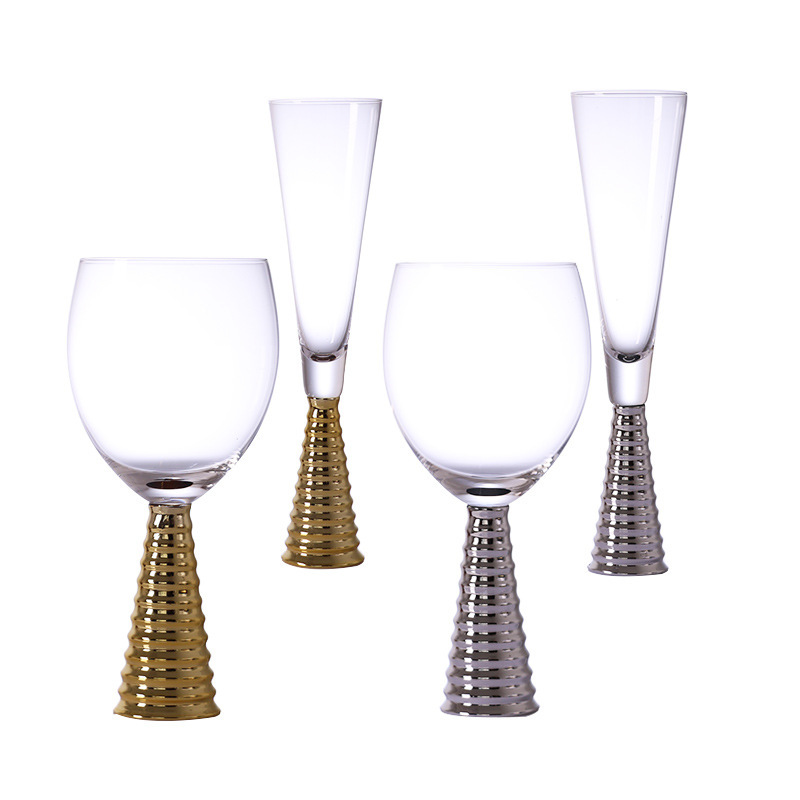
6. The pre-production sample: your ten-minute checklist
Before 1,000 pieces are made, get a pre-production sample — usually a few pieces, sometimes free, sometimes at a small charge — and run it in ten minutes:
- Run a finger around every rim: even, thin, no chips.
- Hold each glass to the light: bright, no tint, no visible seeds or cords.
- Roll each on a table: stem straight, no wobble.
- Weigh them: within a gram or two of each other.
- Fill one with hot water, wait a minute, empty it: no cracks.
Then check the paperwork. What material is written on the spec sheet, and does it match the "lead-free crystal" claim in the listing? If you're importing, lock the material, rim finish and logo decoration into the order in writing — the same discipline you'd apply to any wholesale barware order. For restaurants, our guide to choosing wine glasses by shape and size walks through the varietal side of the same decision.
Shop These Products on Alibaba
| Product (Alibaba listing) | Listing price (Oct 2026) | MOQ |
|---|---|---|
| Hand Blown Red Wine Glasses, Clear, Premium Crystal | US$0.99 | 50 pcs |
| Lead-free Crystal Coupe Glasses, 150ml | US$0.95 | 48 pcs |
| Ultra-Thin Lead-free Crystal Coupe with Twisted Stem, 150ml | US$0.95 | 48 pcs |
| Artisanal Glass Goblets, Handcrafted Stemware | US$3.27 | 100 pcs |
Listing prices shown as of 15 October 2026 and can change; MOQs are per listing. Final pricing depends on quantity, material, finish and logo — request a quote for exact numbers.
Want the glasses and the gift packaging quoted together? Tell us the quantity, the material and the finish — we'll send a quote and a pre-production sample before any 1,000-piece run starts.
See the Full Range of 390+ Products on Alibaba Get a Wine Glass Quote on WhatsApp Inquiry Form