A cheap cocktail shaker almost never fails on the shelf. It fails on the second hard shake of a Friday rush, when the lid pops loose and half a Negroni goes down a bartender's shirt. On the factory floor, that failure is not a mystery — it's a seal problem, and it's the single most common reason buyers come back to us after trying a cheaper supplier. This guide explains the three seal designs, where each one leaks, the two tests we run on every batch, and what actually separates a US$2 shaker from a US$6 one.
It's written for wholesale buyers — bars, restaurants, promo companies and online retailers — so the prices below are the listing prices on our Alibaba store as of October 2026. They're reference points, not quotes: your final price moves with quantity, finish and customization.
1. Three ways a shaker seals — and where each one leaks
Every cocktail shaker uses one of three sealing systems. Know which one you're buying and you already know where to look for trouble.
The Boston shaker: metal on metal, no rubber
A Boston shaker is two tins, one nested inside the other. There is no gasket — the seal is pure friction, helped by the fact that chilled metal contracts and tightens the fit. It's fast, with no lid to unscrew, and it's what working bartenders prefer. The trade-off: the seal lives and dies on the roundness and gauge of the tins. If the outer tin is stamped thin or slightly oval, the inner tin sits loose and the first hard shake sprays.
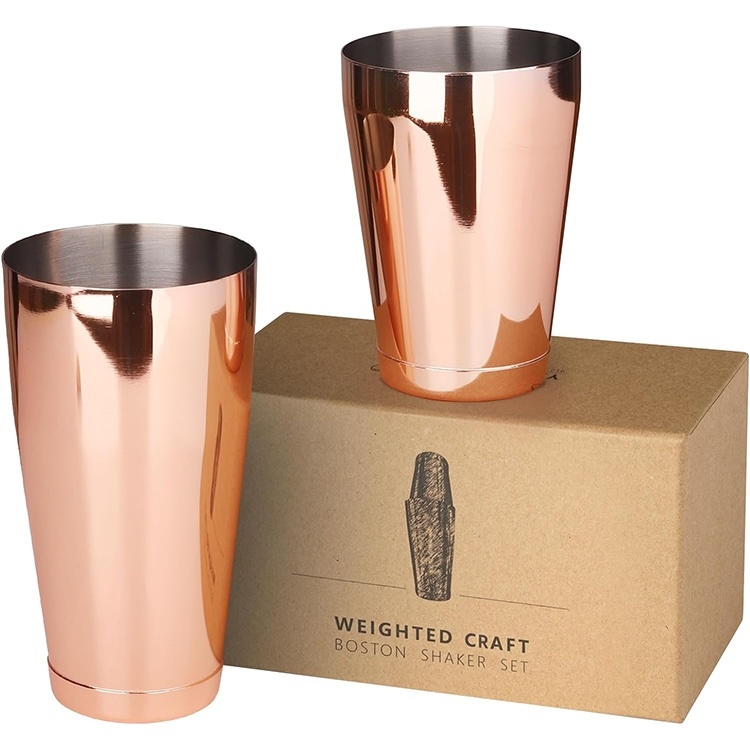
The seal point on a Boston shaker is the line where the two tins meet — that's the only place it can leak, and it only holds if both tins stay round.
The cobbler shaker: cap, strainer and top cap
A cobbler shaker is three pieces — the body, a cap with a built-in strainer, and a small top cap. The seal is mechanical: the strainer cap presses onto the body and the top cap closes the pour holes. It's forgiving for home use because you can't lose a separate strainer, but it has two weak points: a stamped-thin strainer cap that wobbles loose, and a top cap that doesn't press down firmly.
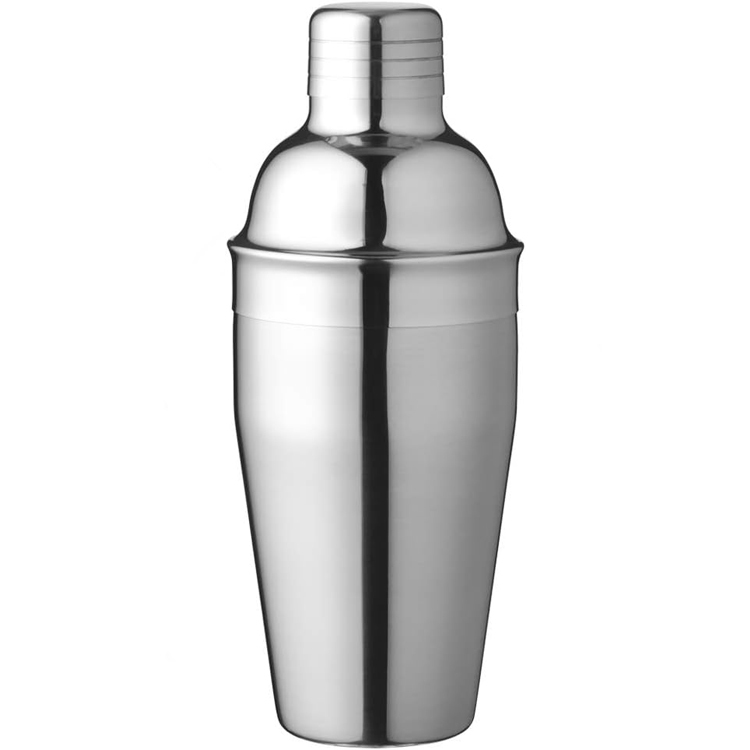
The gasket shaker: a silicone ring does the work
A glass or steel shaker with a silicone seal uses a soft ring around the lid that compresses against the rim. This is the most forgiving design for drinks that need to look good — glass bodies — and for flavored cocktails, but it only works as well as the gasket. Cheap gaskets are often EVA, not food-grade silicone. EVA hardens after a few dishwasher cycles and stops compressing, and then the "leak-proof" shaker leaks.
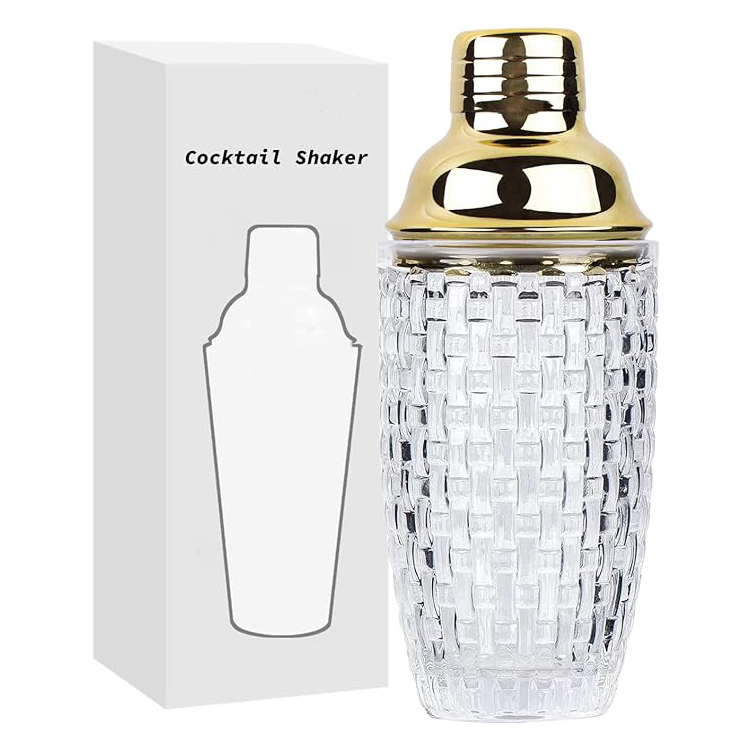
| Seal type | How it seals | Where it fails | Best for |
|---|---|---|---|
| Boston (tin-on-tin) | Friction + cold shrink | Oval or thin-gauge tins | Speed behind the bar |
| Cobbler (cap + strainer) | Mechanical press fit | Stamped-thin strainer, loose top cap | Home bars, gift sets |
| Gasket (silicone ring) | Compression | Undersized or EVA gasket | Glass bodies, flavored drinks |
2. Why the cheap one leaks
When a shaker sells for a dollar or two at wholesale, the factory saved money somewhere. In seal quality, the savings show up in four predictable places:
- Thin-gauge tins. A 0.4mm tin dents easily and goes oval the first time it's squeezed; a 0.6mm tin keeps its shape. Oval tins break the Boston seal.
- No rolled rim. A proper Boston small tin has a rolled edge that helps it grab the outer tin. Cheap versions are cut flat.
- Stamped, not spun. A spun strainer cap is round and sits tight; a stamped one is cheaper but wobbles.
- EVA instead of silicone. The gasket is the easiest part to silently downgrade, and it's the part that fails first in a commercial dishwasher.
The frustrating part for a buyer: none of this is visible in a product photo. A US$1.50 shaker and a US$3 shaker can look identical in a listing. The difference only shows up when you shake it — which is why the next section matters.
3. The two tests we run on every batch
You don't need a lab to check a shaker seal. These are the two tests we run on the line before packing, and you can run both on a sample in thirty seconds.
- The fill-and-invert test. Fill the shaker three-quarters full with water, add three or four ice cubes, seal it and shake hard for 30 seconds. Then hold it upside down over a paper towel for 10 seconds. Any wet spot on the towel means the seal fails. For a Boston shaker, chill the tins first — cold-shrink is part of the seal, so test it cold.
- The dishwasher cycle test (gasket shakers). Run the gasket through three hot wash cycles, then repeat the invert test. Food-grade silicone keeps its compression; EVA hardens and starts to drip.
Ask your supplier whether they leak-test 100% of units or only take a random sample. For a bar ordering 500 shakers, "we check every batch" is a reasonable answer; "we don't test" is your signal to walk away.
4. What actually separates a US$2 shaker from a US$6 one
Here's the honest factory answer: you are not paying for magic. The gap between a US$2 shaker and a US$6 set buys four things — thicker steel, 304 instead of 201, a weighted or rolled construction, and real QC.
- Steel gauge. 0.6mm tin vs 0.4mm tin. The heavier tin stays round, so the Boston seal holds.
- Grade. 304 food-grade steel resists rust at the seam and rim; 201 is cheaper but pits where moisture sits. Our full breakdown is in 304 vs 201 vs 430 stainless steel.
- Weighted base. A weighted Boston shaker or a weighted cobbler base balances in the hand and keeps the shaker standing, and the weight signals a heavier overall build.
- QC. The US$6 price includes the leak test, the roundness check and the parts that got rejected. The US$2 price usually means those steps were skipped.
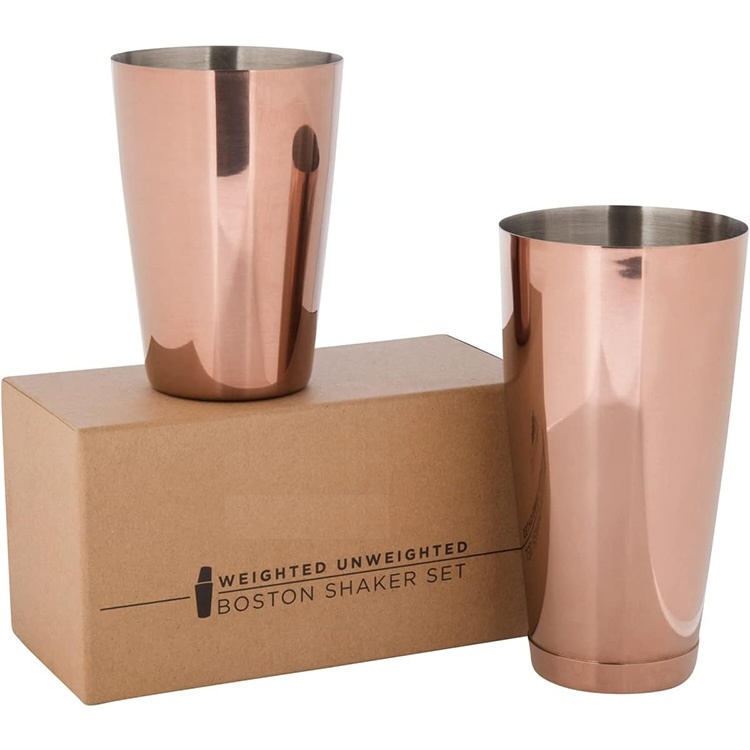
A US$2 shaker is not automatically bad — if the seal geometry is right and the supplier tests, it can serve a home bar for years. The point is that the cheap price is where the risk hides, and the risk is concentrated in exactly the part you can't see in a photo: the seal.
5. Six questions to ask before you order
- "What gauge are the tins?" — 0.5mm minimum for a Boston shaker on service-bar duty; 0.6mm for pro use.
- "304 or 201 steel?" — ask them to write the grade on the quotation.
- "Is the gasket food-grade silicone or EVA?" — if they don't know the difference, keep looking.
- "Do you leak-test every unit or sample AQL?" — get the answer in writing.
- "Can I get a pre-production sample to shake?" — any serious factory says yes.
- "What's the reorder lead time?" — a shaker you can't reorder reliably is a one-off, not a supply line.
If you're still choosing between shaker families, start with Boston vs Cobbler vs Parisian shakers; if capacity is your question, our 500ml vs 700ml vs 1000ml size guide covers what working bars actually order.
Shop these products on Alibaba
All four shakers below are live on our Alibaba store. Click through for current photos, full specs and the latest listing price:
| Product | Listing price* | MOQ |
|---|---|---|
| Copper plated stainless steel Boston shaker | US$1.95 | 50 pcs |
| Glass cocktail shaker with silicone seal & built-in strainer | US$1.75 | 50 pcs |
| Brushed stainless steel conical 550ml cocktail shaker | US$1.90 | 50 pcs |
| Food-grade 304 mirror weighted Boston shaker | US$1.95 | 50 pcs |
*Listing prices as of October 2026 on Alibaba. Quantity, finish and customization change the final price — send us your artwork and target volume for a confirmed quote.
Spec your shakers like a buyer, not a gambler
A shaker that leaks is a returned order, a bad review and a bartender who switches supplier. A shaker that seals is invisible — it just works, night after night. The difference is decided before the first shake, in the gauge of the steel, the roundness of the tin and the honesty of the gasket. Lock those three in writing, test the sample yourself, and the cheap-versus-expensive question answers itself. Browse the full range on our cocktail shakers and bar tools pages, or read about logo and engraving options once you've chosen the shaker.